
20 meccanismi di reazione organica che è essenziale comprendere per gli esperimenti di sintesi
Risposta rapida: A practical wastewater-treatment decision starts with defining the failure mode, then checks pH, COD, ammonia, sludge condition, and process interaction before changing chemistry or operation.
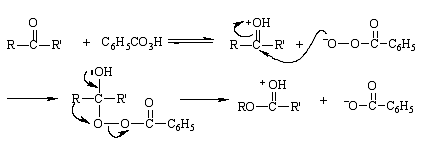
Meccanismo di reazione di Baeyer-Villiger Il peracido subisce dapprima un'addizione nucleofila al gruppo carbonilico, quindi un gruppo idrocarburico sul gruppo carbonilico chetonico migra con una coppia di elettroni verso l'atomo di ossigeno direttamente attaccato all'atomo di carbonio carbonilico nel gruppo -O-O-, mentre si verifica l'eterolisi del legame O-O. Si tratta quindi di una reazione di riarrangiamento
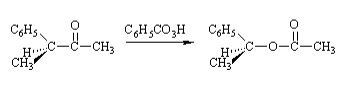
La reazione di un 3-fenilbutanone otticamente attivo con il peracido, in cui gli acini degli atomi di carbonio chirali dei prodotti di riarrangiamento rimangono invariati, indica che la reazione è un riarrangiamento intramolecolare.
Quando un chetone asimmetrico viene ossidato, entrambi i gruppi possono migrare nella fase di riarrangiamento, ma c'è ancora una certa selettività, nell'ordine della loro capacità di migrare come segue.

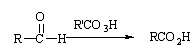
Il meccanismo di ossidazione delle aldeidi è simile, ma la migrazione è di ioni idrogeno negativi per dare l'acido carbossilico.
How technical buyers and operators usually evaluate wastewater-treatment issues
Most wastewater-treatment problems are system problems. Teams usually get a better result when they define the process stage and water-quality target first, then review biological, chemical, and operational factors together before making a plant-scale correction.
- Start from the process stage: pretreatment, biological treatment, sludge handling, and polishing steps can point to very different root causes.
- Check the core water-quality data together: pH, COD, nitrogen, salinity, sludge condition, and dissolved oxygen often need to be read as one picture.
- Review compliance and operability at the same time: the quickest local fix can still be the wrong commercial move if it destabilizes another part of the plant.
- Use pilot or staged validation where possible: wastewater systems often respond differently at scale than they do in simplified bench assumptions.
FAQ per acquirenti e formulatori
Why do many wastewater problems resist one-step fixes?
Because the visible symptom is often created by several interacting process variables rather than one isolated cause.
Should operational changes be evaluated only by one output indicator?
Usually no. A stable treatment decision should consider process balance, compliance, sludge behavior, and the effect on downstream steps as well.