
20 mécanismes de réaction organique qu'il est essentiel de comprendre pour les expériences de synthèse
Réponse rapide : Une décision pratique en matière de traitement des eaux usées commence par la définition du mode de défaillance, puis vérifie le pH, la DCO, l'ammoniac, l'état des boues et l'interaction des procédés avant de modifier la chimie ou le fonctionnement.
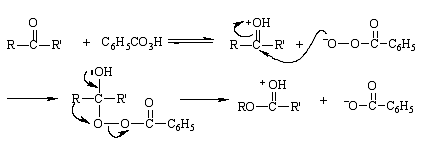
Mécanisme réactionnel de Baeyer-Villiger Le peracide subit d'abord une addition nucléophile sur le groupe carbonyle, puis un groupe hydrocarboné sur le groupe carbonyle de la cétone migre avec une paire d'électrons vers l'atome d'oxygène directement attaché à l'atome de carbone du groupe -O-O-, tandis que se produit une hétérolyse de la liaison O-O. Il s'agit donc d'une réaction de réarrangement, dans laquelle le groupe -O-O- est directement attaché à l'atome de carbone de la cétone. Il s'agit donc d'une réaction de réarrangement
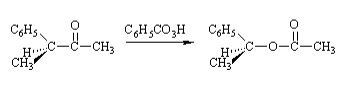
La réaction d'une 3-phénylbutanone optiquement active avec du peracide, où les baies des atomes de carbone chiraux des produits de réarrangement restent inchangées, indique que la réaction est un réarrangement intramoléculaire.
Lorsqu'une cétone asymétrique est oxydée, les deux groupes peuvent migrer lors de l'étape de réarrangement, mais il existe toujours une certaine sélectivité, dans l'ordre de leur capacité à migrer comme suit.

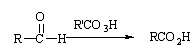
Le mécanisme d'oxydation de l'aldéhyde est similaire, mais la migration des ions négatifs de l'hydrogène donne l'acide carboxylique.
Comment les acheteurs et les exploitants techniques évaluent généralement les problèmes de traitement des eaux usées
La plupart des problèmes de traitement des eaux usées sont des problèmes systémiques. Les équipes obtiennent généralement de meilleurs résultats lorsqu'elles définissent d'abord l'étape du processus et l'objectif de qualité de l'eau, puis examinent conjointement les facteurs biologiques, chimiques et opérationnels avant d'apporter des corrections à l'échelle de la station d'épuration.
- Commencez par l'étape du processus : Les étapes de prétraitement, de traitement biologique, de gestion des boues et de polissage peuvent révéler des causes profondes très différentes.
- Analysez ensemble les données essentielles sur la qualité de l'eau : Le pH, la DCO, l'azote, la salinité, l'état des boues et l'oxygène dissous doivent souvent être interprétés comme un tout.
- Vérifier simultanément la conformité et l'opérabilité : La solution locale la plus rapide peut néanmoins s'avérer une erreur commerciale si elle déstabilise une autre partie de l'usine.
- Utilisez une validation pilote ou par étapes lorsque cela est possible : Les systèmes d'assainissement réagissent souvent différemment à grande échelle que dans le cadre d'hypothèses simplifiées étudiées en laboratoire.
FAQ pour les acheteurs et les formulateurs
Pourquoi de nombreux problèmes d'eaux usées résistent-ils aux solutions simplistes ?
Car le symptôme visible est souvent créé par plusieurs variables de processus interagissant plutôt que par une cause isolée.
Les changements opérationnels doivent-ils être évalués à l'aide d'un seul indicateur de résultat ?
Généralement non. Une décision de traitement stable doit prendre en compte l'équilibre du processus, la conformité, le comportement des boues et l'effet sur les étapes en aval.