


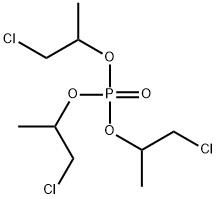
TCPP retardateur de flamme Scénarios d'application
1. Matériaux en polyuréthane
Isolation des bâtiments mousse rigide, mousse souple (par exemple, sièges automobiles, canapés, matelas), mousse pulvérisée, adhésifs
2. Autres plastiques et résines
Chlorure de polyvinyle (PVC), résine époxy, polyester insaturé, résine phénolique, résine acrylique, polystyrène (PS)
3. Textiles et revêtements
Traitement ignifuge des tissus, peintures, revêtements
4. Applications spéciales
Ils peuvent être utilisés comme additifs pour les lubrifiants et l'essence, ainsi que comme solvants à point d'ébullition élevé dans les procédés chimiques.
💡 Pourquoi le TCPP est-il largement utilisé ?
- Forme physique et compatibilité :
Liquide à température ambiante avec une faible viscosité ; présente une excellente compatibilité avec les matières premières de polyuréthane (polyols), le PVC et d'autres résines, ce qui facilite le mélange et le traitement.
- Mécanisme d'ignifugation :
En tant que retardateur de flamme "additif", il devient efficace lorsqu'il est incorporé directement dans les matériaux au cours du traitement. Sa structure moléculaire contient à la fois des éléments de phosphore et de chlore, ce qui produit un effet ignifuge synergique d'une grande efficacité.
-Performances et coûts globaux :
Outre l'ignifugation, le TCPP présente également des propriétés de plastification et améliore l'aptitude à la transformation des matériaux. En outre, sa technologie de production est mature et son coût est relativement modéré, ce qui offre un équilibre favorable entre efficacité et prix.


Ethan Carter -
Superbe service, réponses opportunes, logistique sans problème, merveilleux achats !