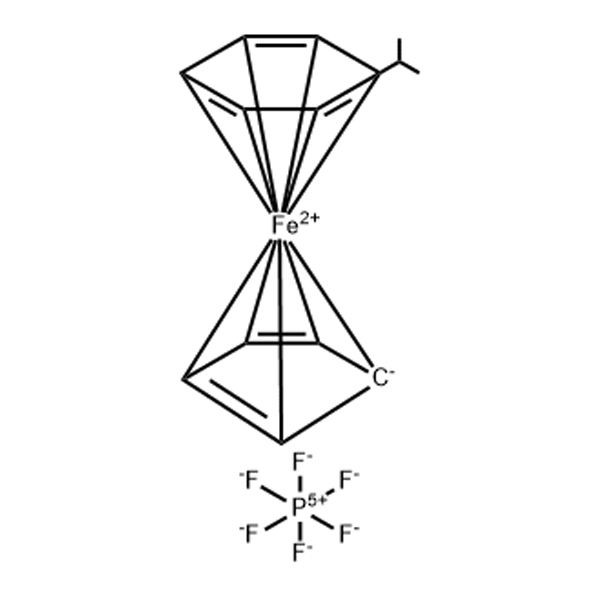
Photoinitiator 261 Application scenarios
1. Adhesives
Structural adhesives, assembly adhesives, laminating adhesives, etc.
Suitable for bonding opaque substrates; enables “submerged curing” with flexible processing. FDA-approved for use in adhesives for food contact materials.
2. Coatings and Inks
UV-curable coatings, printing inks
As a cationic initiator, it produces cured films with low shrinkage, excellent adhesion, and strong chemical resistance.
3. Electronics & Packaging Materials
Photoresists, electronic component encapsulants, insulating coatings
Cationic polymerization resists oxygen inhibition for more thorough curing; suitable for precision processing.
4. Research & Frontier Applications
Chemiluminescence-induced polymerization systems, biomedical material exploration
Responds to visible light (e.g., 405nm LED), enabling studies under mild or specialized illumination conditions.
🧪 In-Depth Core Characteristics
Light Absorption Properties:
Strong absorption in the near-UV region (around 440nm) and weak absorption in the short-wavelength visible spectrum. Thus suitable not only for traditional UV lamps but also for certain visible light sources (e.g., 405nm LEDs).
“Latent Curing” Mechanism:
The resin system does not fully cure immediately upon light exposure but forms a “latent cured gel layer.” Upon bonding the substrates and applying appropriate heat, it rapidly completes curing to achieve a strong bond. This is particularly suitable for assembly processes where simultaneous light exposure and pressure application are impractical.
Thermal Stability:
The adhesive exhibits excellent inherent thermal stability, resisting decomposition even when heated above 300°C. Even when mixed with epoxy resin, heating to 210°C does not trigger thermosetting, ensuring stability during processing and storage.


Reviews
There are no reviews yet.