
What are bio-based plasticizers and what are the advantages of our CHLUMIFLEX® BBP?
Quick answer: For plasticizer topics, buyers usually compare flexibility, migration behavior, processing fit, and compliance together because end-use requirements can vary sharply between food contact, flexible plastics, and general industrial products.
Plasticizers make PVC materials soft and easy to process, and are widely used in plastic production. Phthalates plasticizers account for 85% of the total plasticizer market. Considering toxicity, the application of o-phthalic plasticizers is limited, and the bio-based plasticizer industry has begun to deploy the market.
As a chemical that softens materials such as plastics, plasticizers are widely found in toys, food packaging materials, nail polish, shampoos, medical appliances, and even food products, but some plasticizers may cause tissue damage. Cancer, disrupt human endocrine and so on. As a result, bio-based plasticizers that are non-toxic to the human body and non-polluting to the environment emerge as the times require, becoming an ideal choice to replace traditional plasticizers.
The source of bio-based plasticizers is stable, and the price advantage and stability are more prominent than traditional plasticizers,
In recent years, more and more manufacturers have begun to deploy bio-based plasticizers in the market. We have also made some phased progress and breakthroughs in the field of bio-based plasticizers, and have received wide recognition from PU and glove customers.
CHLUMIFLEX® BBP infos
Brief Introduction
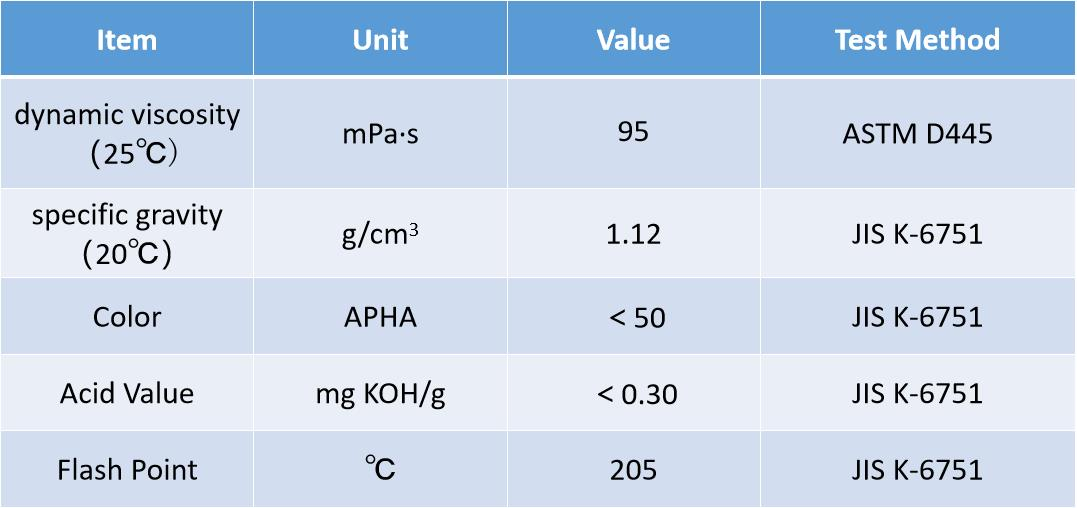
CHLUMIFLEX® BBP has the most approximate physical property to DOTP among the all existing PVC plasticizers.
CHLUMIFLEX® BBP can be applied to PVC flooring, cable and wires, films, etc.
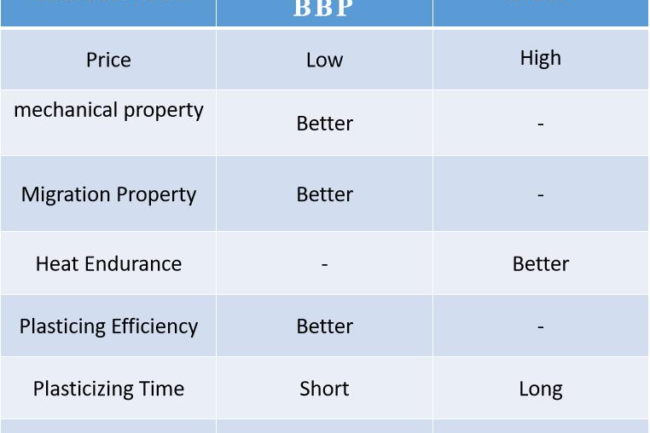
CHLUMIFLEX® BBP has better performance in plasticizing efficiency, mechanical property, migration property and blending time. It’s the best substitute of DOTP.
Advantage
Comparison with DOTP and DINCH
CHLUMIFLEX® BBP’s plasticizing speed is about 2 times of DOTP or DINCH. Using CHLUMIFLEX® BBP can save energy and improve production efficiency.
Using CHLUMIFLEX® BBP to replace DOTP or DINCH by 100% can reach same plasticizing effect, ajustment in formular or production line is not needed.
Using CHLUMIFLEX® BBP can improve end product’s transmittancy and Haze.
CHLUMIFLEX® BBP has same Migratory resistance as DOTP .
CHLUMIFLEX® BBP has better mechanical property than DOTP does.
Product indicators
Horizontal comparison of various product application indicators DOTP and DINCH
- Superior environment-friendly plasticizer
– Regulation (EC) No 1907/2006
– Antimicrobial testing by SGS
- Sustainability of raw material
– Raw material comes from plant oil, non-toxic, bezene-free, biodegradable.
- outstanding physical property
-Better migration property than DOTP does.
-Better plasticizing power than DOTP does.
-Lower price (Now CHLUMIFLEX® BBP is CNY400~500/mt lower than DOTP, a factory can save 2.4million CNY per year with monthly consumption of 600mt)
conclusion
CHLUMIFLEX® BBP has better migration property than DOTP does.
It has great application space in the printed PVC and composite flooring.
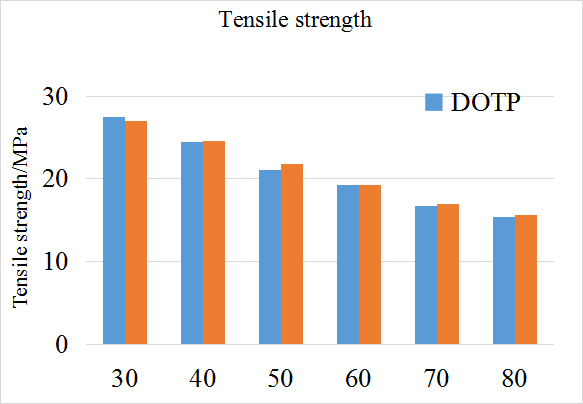
Test of tensile strength
conclusion
Tensile Strength is an important index of plastic mechanical properties
The sample is subjected to an external force (tensile load) until the maximum tensile force before fracture
CHLUMIFLEX® BBP’s tensile strength is nearly same as DOTP. Using CHLUMIFLEX® BBP to replace DOTP does not affect the end products’ tenacity. Same plasticizing efficiency (Evaluated by tensile strength)
How buyers usually evaluate plasticizers and flexibility modifiers
Plasticizer sourcing usually goes more smoothly when the end-use exposure, migration limit, and processing route are reviewed before price negotiations. That usually gives a clearer answer on whether a phthalate, terephthalate, or citrate route is commercially strongest.
- Start from the end-use requirement: food contact, toys, medical, and general industrial plastics need different screening priorities.
- Review migration and permanence: flexibility alone is not enough if the application is sensitive to extraction, volatility, or long-term loss.
- Check process fit: compatibility, viscosity effect, and thermal stability often decide whether a plasticizer is easy to scale.
Recommended product references
- CHLUMIFLEX ATBC: A practical non-phthalate plasticizer reference for food-contact and compliance-sensitive discussions.
- CHLUMIFLEX DOTP: A common terephthalate-plasticizer benchmark when balancing processability, migration profile, and compliance needs.
- CHLUMIFLEX DBP: A conventional plasticizer comparison point when historical formulation routes or substitution choices are being reviewed.
FAQ for buyers and formulators
Why is a lower-cost plasticizer not always the better sourcing choice?
Because compliance, migration profile, and process stability can quickly outweigh the unit-price difference.
Should plasticizer selection be based on flexibility only?
Usually no. The strongest choice also needs to match migration expectations, thermal behavior, and the real end-use standard.