
20 organic reaction mechanisms that are essential to understand for synthetic experiments
Quick answer: A practical wastewater-treatment decision starts with defining the failure mode, then checks pH, COD, ammonia, sludge condition, and process interaction before changing chemistry or operation.
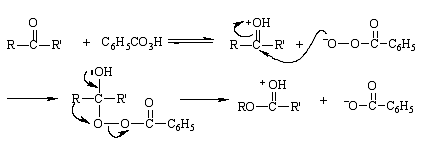
Baeyer-Villiger reaction reaction mechanism peracid first undergoes nucleophilic addition to the carbonyl group, and then a hydrocarbon group on the ketone carbonyl group migrates with a pair of electrons to the oxygen atom directly attached to the carbonyl carbon atom in the -O-O- group, while O-O bond heterolysis occurs. Thus, this is a rearrangement reaction
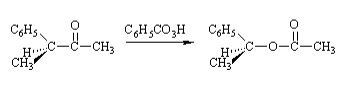
The reaction of an optically active 3–phenylbutanone with peracid, where the berries of the chiral carbon atoms of the rearrangement products remain unchanged, indicates that the reaction is an intramolecular rearrangement.
When an asymmetric ketone is oxidized, both groups can migrate in the rearrangement step, but there is still some selectivity, in the order of their ability to migrate as follows.

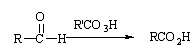
The mechanism of aldehyde oxidation is similar, but the migration is of hydrogen negative ions to give the carboxylic acid.
How technical buyers and operators usually evaluate wastewater-treatment issues
Most wastewater-treatment problems are system problems. Teams usually get a better result when they define the process stage and water-quality target first, then review biological, chemical, and operational factors together before making a plant-scale correction.
- Start from the process stage: pretreatment, biological treatment, sludge handling, and polishing steps can point to very different root causes.
- Check the core water-quality data together: pH, COD, nitrogen, salinity, sludge condition, and dissolved oxygen often need to be read as one picture.
- Review compliance and operability at the same time: the quickest local fix can still be the wrong commercial move if it destabilizes another part of the plant.
- Use pilot or staged validation where possible: wastewater systems often respond differently at scale than they do in simplified bench assumptions.
FAQ for buyers and formulators
Why do many wastewater problems resist one-step fixes?
Because the visible symptom is often created by several interacting process variables rather than one isolated cause.
Should operational changes be evaluated only by one output indicator?
Usually no. A stable treatment decision should consider process balance, compliance, sludge behavior, and the effect on downstream steps as well.