
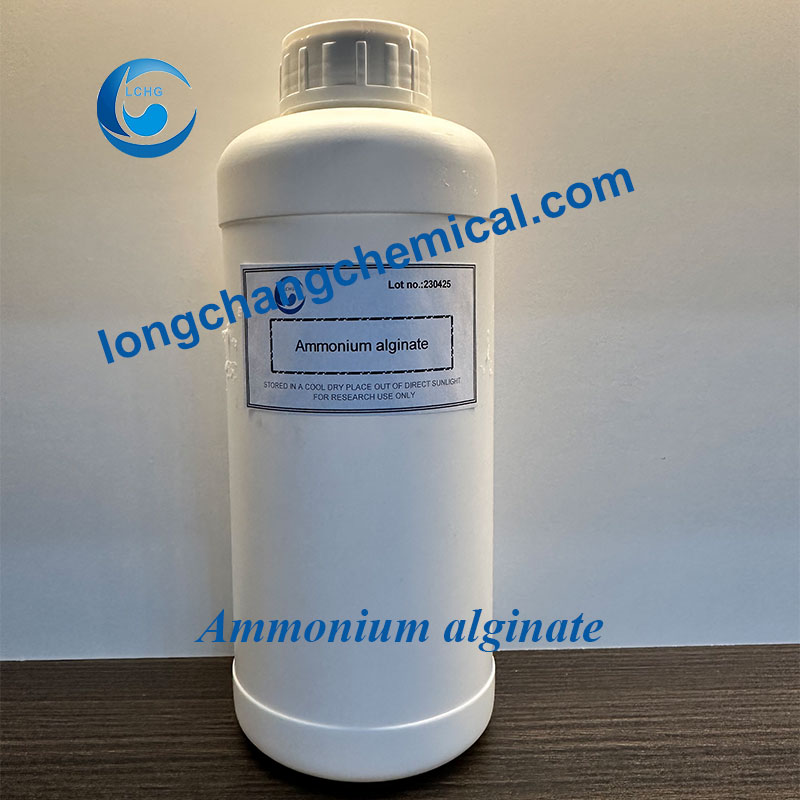
alginato de amônio Cenários de aplicação
1. Indústria alimentícia: Como espessante, estabilizador e agente gelificante
O alginato de amônio é um aditivo alimentar aprovado para uso em muitos países e regiões (como o E403 da UE). Em alimentos, ele é usado principalmente para melhorar a textura, a sensação na boca e a estabilidade.
- Confeitaria, geléias e condimentos: Usado em doces, geleias e molhos para aumentar a viscosidade e evitar a separação, em uma concentração de aproximadamente 0,4% do peso total do alimento.
- Produtos lácteos e sobremesas: Usado em sorvetes, milkshakes, pudins de gelatina e molhos doces para criar uma textura suave, evitar a formação de cristais de gelo e aumentar a resistência à separação, em uma concentração entre 0,1% e 0,5%.
- Produtos de panificação e macarrão: Adicionado a pães, bolos e macarrão para melhorar a textura e o sabor e aumentar a utilização da matéria-prima, em uma concentração de aproximadamente 0,05% do peso total da matéria-prima.
- Produtos cárneos e enlatados: Usado em molhos de carne, recheios de tortas e produtos de frutos do mar processados para proporcionar propriedades de ligação, evitar vazamento de umidade e manter o formato e o frescor do produto.
- Outros alimentos: De acordo com os padrões do Codex Alimentarius, também é permitido o uso em massas secas, iogurte fermentado tratado termicamente, produtos de peixe congelado e outras categorias.
2. Campo farmacêutico: Como excipiente e componente de curativos médicos
- Excipiente farmacêutico: Em produtos farmacêuticos, o alginato de amônio pode ser usado como aglutinante, emulsificante, agente formador de filme e agente de controle de viscosidade.
- Curativos para tratamento de feridas: Esse é um importante uso médico especializado. O alginato de amônio é um componente essencial dos curativos de alginato para feridas (por exemplo, o produto "Kaltostat"). Quando em contato com o exsudato da ferida, ele absorve o fluido e forma um gel macio, proporcionando um ambiente de cicatrização úmido para a ferida, além de promover a hemostasia e reduzir a dor durante a troca de curativos.
3. Indústrias químicas e têxteis cotidianas
- Cosméticos: Usado como estabilizador de emulsão e regulador de viscosidade em loções, cremes e outros produtos, normalmente em uma concentração entre 0,1% e 1%. - Impressão e tingimento de têxteis:
Usado como agente espessante em pastas de impressão, melhorando a adesão do corante e a clareza da impressão. A dosagem típica é de 1%-3% do peso total da pasta.
Usado como agente de dimensionamento de urdidura, aumentando a resistência do tecido e reduzindo a quebra da urdidura durante o processo de tecelagem.
- Indústria de papel: Usado como agente de colagem para papel para melhorar a resistência e a brancura do papel.
4. Outros campos e campos emergentes
- Proteção química e ambiental: Na produção de produtos químicos, pode ser usado como catalisador de reação ou modificador de viscosidade; no tratamento de águas residuais, suas propriedades floculantes ajudam a purificar a água.
- Pesquisa científica: Estudos demonstraram que o alginato e seus derivados apresentam potencial em termos de atividade biológica, como possíveis efeitos antitumorais, antibacterianos, imunomoduladores e neuroprotetores, mas a maioria deles ainda está em fase de pesquisa.


Comentários
Ainda não há comentários.