
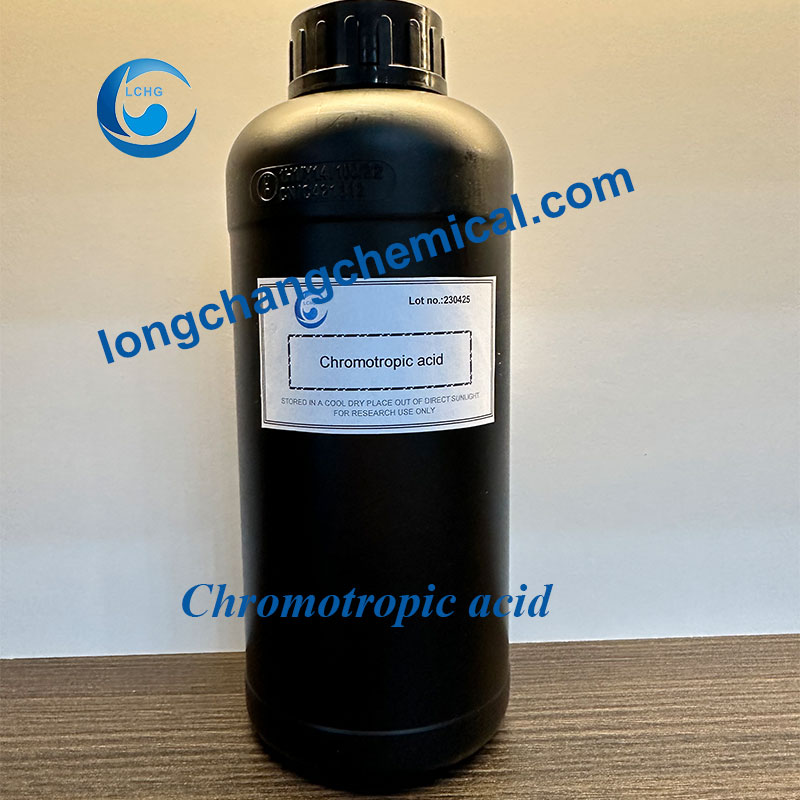

chromotropic acid Application scenarios
1. Spectrophotometric Chromogenic Reagents in Analytical Chemistry (Core Applications)
• Formaldehyde Detection:
Under acidic conditions, it condenses with formaldehyde to form a purple-red compound, used for the quantitative analysis of formaldehyde content in air, water, food, and textiles. It is one of the commonly used methods in national and industry standards.
• Detection of Carbohydrates and Aldehyde Compounds:
It reacts with reducing sugars such as glucose and fructose, as well as other aldehydes, to produce a color reaction, used for the qualitative and quantitative analysis of related substances in biological samples and food and beverages.
• Heavy Metal Ion Detection:
As a complexing indicator, it forms stable colored complexes with metal ions such as chromium, titanium, and iron, used for the determination of heavy metals in metallurgical wastewater, ores, and metal materials.
• Petrochemical Component Analysis:
Used to detect the content of alkanes and aromatics in lubricating oil and diesel fuel, as well as sulfides and nitrogen oxides in industrial exhaust gases.
2. Intermediates in the Dye and Pigment Industry
• Synthesis of Acid Dyes and Direct Dyes:
Used in the preparation of naphthol dyes, which are characterized by bright colors and good lightfastness, suitable for dyeing natural fibers such as wool, silk, cotton, and linen.
• Synthesis of Reactive Dyes:
As a precursor of the diazo component of azo dyes, it participates in the construction of the dye molecular structure, improving the binding fastness between the dye and the fiber.
• Preparation of Pigment Additives:
Used in the production of coloring aids for colored coatings and inks, improving the dispersibility and coloring power of pigments.
3. Organic Synthesis and Polymer Material Modification
• As a sulfonation reagent, it participates in the sulfonation reaction of aromatic compounds, synthesizing functional materials with hydrophilic groups.
• Used as a functional monomer for the preparation of ion exchange resins, providing the resin with sulfonic acid functional groups, improving ion exchange capacity and selectivity.
• As a polymer crosslinking agent, a small amount is added to phenolic resins and epoxy resins to improve the heat resistance and mechanical strength of the materials.



리뷰
아직 리뷰가 없습니다.