
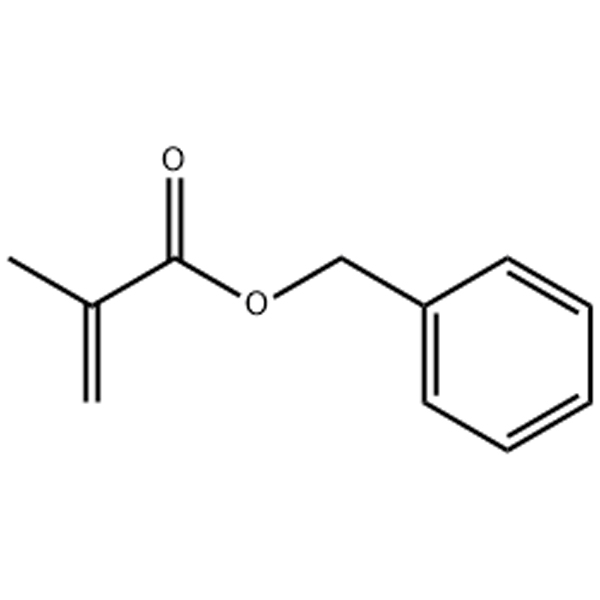
BZA Monomer Application scenarios
1. 🔬 Optical Materials
Used in manufacturing optical lenses, prisms, waveguides, optical fiber cores/clads, and anti-reflective coatings.
High refractive index (polymer refractive index > 1.5) enables precise control over light propagation.
2. 🧬 Biomedical Research
Used in preparing hydrogels (for tissue engineering, drug sustained release) and drug delivery carriers (e.g., nanoparticles).
Possesses biocompatibility and metabolizability; can participate in forming biomaterials.
3. ⚗️ Chemical Synthesis and Applications
Synthesizes polymers like polyacrylamide and polyacrylic acid; serves as an organic synthesis intermediate in Heck reactions, Michael additions, etc.
Contains highly reactive acrylate groups, readily undergoing polymerization and various addition reactions.
4. 🏭 Other Industrial Applications
Used in manufacturing high-performance inks, coatings, adhesives, and acrylic resins.
After polymerization, it provides excellent film-forming properties, adhesion, and durability.
📝 Application Details and Principles
Core of Optical Applications:
Its high refractive index stems from the introduction of benzene ring structures, enabling polymers derived from it to more effectively “bend” light. This is crucial for devices requiring precise optical path control.
Status in Biomedical Applications:
Current biomedical applications primarily remain in the research phase, with potential focused on leveraging its polymerizable nature to construct biomaterials with tailored mechanical strength and degradability.
Role in Chemical Synthesis:
As a versatile monomer, it can generate homopolymers via radical polymerization and copolymerize with other monomers to adjust the final polymer’s hardness, flexibility, and other physicochemical properties.


리뷰
아직 리뷰가 없습니다.