
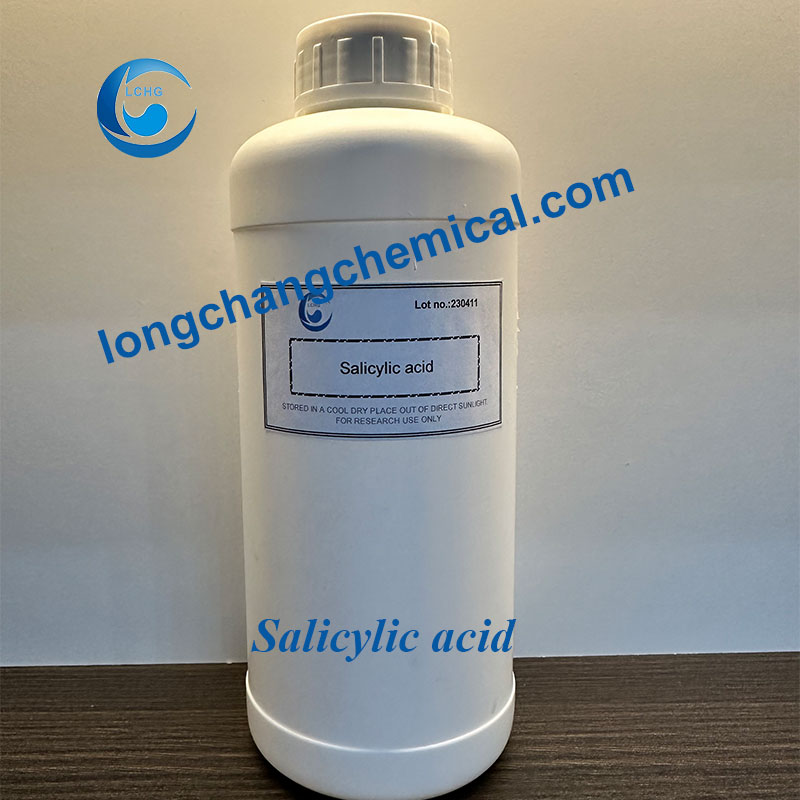

Salicylic acid Application scenarios
1. Campo farmacêutico
• Antipyretic, analgesic, and anti-inflammatory drugs: As a precursor substance, it is a key raw material for the synthesis of aspirin (acetylsalicylic acid).
• Dermatological medications:
• Keratolytic and exfoliating agents: Used to treat acne, pimples, psoriasis, seborrheic dermatitis, etc.
• Antifungal and anti-infective agents: Used to treat corns, warts, and athlete’s foot.
• Topical preparations: Commonly used in ointments and patches to relieve muscle pain and arthritis.
2. Cosméticos e produtos de cuidados pessoais
• Acne treatment products: Due to its lipid solubility and anti-inflammatory and antibacterial properties, it is widely used in acne treatment serums and facial cleansers.
• Exfoliation and skin renewal: As a chemical exfoliant, it promotes keratin metabolism, improves enlarged pores and uneven skin tone.
• Shampoos and hair care products: Used in anti-dandruff shampoos (to relieve dandruff and seborrheic dermatitis).
• Preservative: At low concentrations, it can be used as a mild preservative inhibitor.
3. Industrial and Chemical Fields
• Dye intermediates: Used in the synthesis of azo dyes and other colorants.
• Fragrance synthesis: As a raw material for the synthesis of coumarin and salicylate fragrances (such as wintergreen oil scent).
• Rubber additives: As an anti-scorching agent and vulcanization retarder.
• UV absorber: Used in the synthesis of sunscreens (such as homosalate).
4. Agriculture and Plant Protection
• Pesticide intermediates: Used in the synthesis of herbicides and insecticides.
• Plant growth regulation: Salicylic acid itself is an endogenous plant hormone and can be applied externally to enhance crop disease resistance.
5. Laboratório e pesquisa
• Analytical reagents: Used for metal ion detection, pH indicators, and chromatographic analysis.
• Biochemical research: Studying plant signal transduction and stress resistance mechanisms.
6. Food Industry (Limited Use)
• Preservative: Used in small amounts as a preservative in some foods (Note: Regulations are strict, and most countries have restricted direct addition).
7. Other Uses
• Cultural heritage preservation: Used for mildew prevention treatment of paper and textiles. • Battery electrolyte additive: Corrosion inhibitor for lead-acid batteries.


Comentários
Ainda não há comentários.