
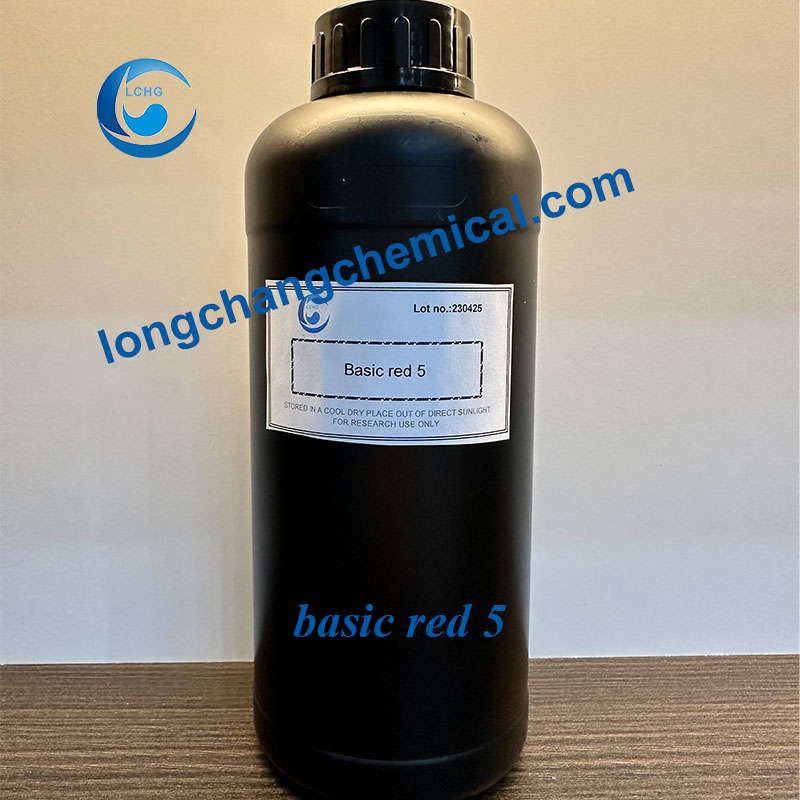

basic red Application scenarios
1. Acid-Base Indicator: This is its basic use. Its solution changes color between pH 6.8 (red) and 8.0 (yellow), and is commonly used to determine the acidity or alkalinity of samples such as water and urine.
2. Cell Viability Assessment and Staining: This is its core biological application. Live cells can absorb neutral red and store it in acidic lysosomes (animal cells) or vacuoles (plant cells), staining them red; dead cells lack this ability, and usually only the nucleus is lightly stained. Therefore, it is widely used in:
• Cytotoxicity testing: Assessing the toxicity of drugs or chemicals by measuring the amount of dye absorbed by live cells.
• Live cell observation: Used for vital staining of peripheral blood or other tissue cells.
3. Histological Staining: Used as a nuclear stain or counterstain in tissue section staining (such as in Gram staining or Twort staining), making structures such as cell nuclei appear red.
4. Staining of Specific Cellular Structures: Can be used to visualize Nissl bodies in animal nerve cells and structures in plant cells.
5. Fat Hydrolysis Indicator: In histochemical experiments, it can be used to indicate the process of fat hydrolysis.
6. Microbial Identification: Added to culture media such as MacConkey agar, it is used to identify whether bacteria ferment lactose.
7. Test Strip Preparation and Analytical Detection: Used to prepare neutral red test strips for convenient and rapid pH detection. It has also been used for the photometric determination of iodide ions, etc.


Comentários
Ainda não há comentários.