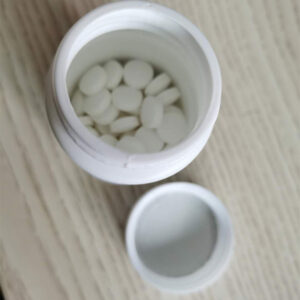
D-Lactide CAS 13076-17-0

Product Name: D-LACTIDE

CAS No.: 13076-17-0

Molecular Formula: C6H8O4

Molecular Weight:144.13

Chemical Structure:D-LACTIDE CAS 13076-17-0

Appearance: White crystals

D-Lactide Application scenarios

1. Biomedical Materials:

Absorbable sutures, bone screws, tissue engineering scaffolds, and drug delivery carriers.

Its polymers (such as polylactic acid) possess excellent biocompatibility and biodegradability, allowing for safe absorption in the body.

2. High-Performance Biodegradable Plastics:

Used for producing films, packaging materials, disposable tableware, and fibers.

Homopolymers (dextral polylactic acid) exhibit good stereoregularity, high crystallinity, and good mechanical strength, making them suitable for manufacturing durable products.

3. Polymer Modification:

Copolymerized with other monomers such as L-lactide and ε-caprolactone.

Used to control the degradation rate, transparency, and flexibility of the final material.

4. Chemical Synthesis:

As a cyclic esterifying agent, it participates in the synthesis of cyclic compounds with specific structures.

Utilizing its active cyclic structure, it constructs specific functional molecules in organic synthesis.

5. Scientific Research:

Used in biochemical and physiological research.

As a research chemical, it is used in related experiments and analyses.

Description

D-Lactide CAS 13076-17-0

Item

Standard

Results

Appearance

White crystals

White crystals

Melting point(℃)

96-99

97

Water content,%

≤0.4

0.12

Heavy metal content(ppm)

≤5

≤5

Free acid

≤0.1

0.056

Ash,%

≤0.05

0.035

Purity,%

≥99.5

≥99.5

Optical rotation (dichloromethane, 25 ° C)

260~265°

262°

Conclusion

Qualified


D-LACTIDE Usage

D-(+)-Propyl cross ester is a cyclic diester of lactic acid, a by-product that is produced by muscle sarcomeres and red blood cells when the body breaks down carbohydrates for energy at low oxygen levels. A suitable catalyst can be used to polymerize the propionyl ester into polylactic acid, resulting in a material with useful properties.

D-LACTIDE Storage

1. This series of products are biodegradable materials. Avoid contact with water, acidic substances, alkaline substances, alcohol reagents and other reagents that can cause product degradation during storage.

2. This series of products should be sealed and stored in a dry and low temperature (refrigerator freezing -20 degrees) during storage, and should be sealed with a sealer (the remaining products after use must not be packaged and stored in ziplock bags).

3. When in use, take it out of the refrigerator and place it at room temperature, and wait until the temperature reaches room temperature to wipe off the condensed moisture on the surface of the packaging bag before opening (the moisture in the air will condense on the surface of the product and degrade the product when it is taken out of the refrigerator without a constant temperature and opened). The air humidity of the environment during use should be less than 35% to prevent the remaining products from getting damp and affecting product quality.

D-LACTIDE Packaging

500g/Bag or 1kg/Bag or 25kg/Drum.


How to distinguish D-LACTIDE and L-LACTIDE?

1. The needle-shaped crystals of L- and D-lactide are the same, and the melting point is the same, and the appearance is indistinguishable. The racemic form can be distinguished from the appearance, and it is not needle-shaped, and the melting point is different.
2. Nuclear magnetism and infrared cannot be distinguished, optical rotation can be distinguished, left-handed is negative, right-handed is positive, racemization has no optical rotation


Same series products

D-LACTIDE

13076-17-0

L-LACTIDE

4511-42-6

Contact Us Now!

If you need COA, MSDS or TDS, fill out the form below, we will usually contact you within 24 hours. You could also email me info@longchangchemical.com during working hours ( 8:30 am to 6:00 pm UTC+8 Mon.~Sat. ) or use the website live chat to get prompt reply.


Reviews

There are no reviews yet.

Be the first to review “D-Lactide CAS 13076-17-0”

Contact US

English