
Cyclopentanon CAS 120-92-3

Chemische naam: Cyclopentanon

CAS-nr.:120-92-3

Moleculaire formule: C5H8O

Molecuulgewicht: 84,12

Uiterlijk: Transparante vloeistof

Analyse: 99,5%

Moleculaire structuur:afbeelding.png

Cyclopentanone Application scenarios

1. As a core intermediate in organic synthesis, it is used to prepare various fine chemicals (its primary use).

Synthetic pharmaceutical intermediates: These are key precursors for many antibacterial, antiviral, and anti-anxiety drugs, such as the synthesis of the antiepileptic drug gabapentin and the antidepressant moclobemide, as well as side-chain intermediates for antibacterial drugs. They can also be used to prepare intermediates for antihistamines and lipid-lowering drugs, primarily utilizing the addition and reduction properties of their ketone carbonyl groups in the reactions.

Synthetic pesticide intermediates: Used to produce highly effective and low-toxicity pesticides, including insecticides (such as pyrethroid derivatives), fungicides (such as heterocyclic fungicides for controlling fungal diseases in crops), and herbicides. They can enhance the activity and targeting of pesticides while reducing environmental toxicity.

Monomers for Synthetic Polymers: Used to prepare specialty resins (such as polycyclopentanone resin), polyesters, polyurethanes, etc. These polymers possess characteristics such as high and low temperature resistance, corrosion resistance, and high strength, making them suitable for manufacturing components in aerospace and high-end machinery. They can also be used to synthesize cyclopentene derivatives as rubber modifiers, improving the wear resistance and elasticity of rubber.

2. Applications in the Fragrance and Flavor Industry

Direct Use in Fragrance Blending: Cyclopentanone itself has a slight minty aroma and the characteristic soft scent of ketones. It can be used in small quantities to blend minty, fruity, and woody fragrances in daily-use fragrances (such as perfumes, soaps, and laundry detergents), playing a supporting role in enhancing and fixing the fragrance.

Synthetic Intermediates for High-Grade Fragrances: It is a key raw material for preparing sandalwood fragrances (such as sandalwood ethers and sandalwood esters). Sandalwood fragrances have a long-lasting and elegant aroma, widely used in the core blending of high-end perfumes and cosmetic fragrances. Simultaneously, it can be used to synthesize other alicyclic fragrances, compensating for the insufficient production of natural fragrances.

3. Solvent Uses

As a specialty solvent, it dissolves resins, oils, rubber, and other substances. Being an alicyclic ketone solvent, its solubility is superior to some aliphatic solvents, and its volatility is moderate. It is commonly used in the formulation of high-end coatings and inks, improving the leveling and adhesion of coatings, and is suitable for coating precision instruments and high-end furniture.

It is a commonly used solvent in laboratory organic synthesis, especially suitable for reactions requiring weakly polar ketone solvents. It does not undergo side reactions with most reactants, facilitating subsequent product separation and purification.

4. Other Industrial and Scientific Applications

Preparation of Fine Chemical Additives: For example, it can be used to synthesize lubricating oil additives, improving the oxidation resistance and anti-wear properties of lubricating oils and extending the service life of mechanical equipment; it can also be used to synthesize electroplating brighteners for metal electroplating processes, resulting in more uniform and glossy coatings.

Basic Raw Material in Scientific Research: Used to study the chemical reaction mechanisms of cyclopentane derivatives and develop novel functional compounds. It is also used as a standard for qualitative and quantitative analysis in chemical and pharmaceutical testing fields.

A small amount is used to prepare dye intermediates and synthesize alicyclic dyes. These dyes have bright colors and good lightfastness, and are suitable for dyeing synthetic fibers.
Beschrijving

Cyclopentanon CAS 120-92-3

Dichtheid: 0,951 g/cm

Smeltpunt: - 51 C

Kookpunt: 130-131 C

Brekingsindex: 1.436-1.438

Vlampunt: 31 C

Oplosbaarheid in water: onoplosbaar in water.


COA van cyclopentanon

Item

Standaard

Uiterlijk

Transparante vloeistof

Kleur (Hazen nr.)

≦10

Zuiverheid (GC )

≧99,5%

Zuurgetal (mgKOH/g)

≦0,5%

Totaal onzuiverheden

≦0,5%

Watergehalte

≦0,5%

Cyclopentanon Gebruik

1. Met behulp van cyclopentanon en n-valeraldehyde als grondstoffen, ondergaan eerst aldolcondensatie en vervolgens dehydratie om pentylcyclopentanon te produceren, gevolgd door selectieve katalytische hydrogenering om pentylcyclopentanon te produceren, dat sterk Het heeft een bloemige en fruitige geur, en heeft een jasmijngeur. Het kan worden gebruikt in dagelijkse chemische geurformules. De dosering kan lager zijn dan 20%. IFRA heeft geen beperkingen.

2. Met n-hexanal en cyclopentanon als grondstoffen, eerst condenseren en dan selectief hydrogeneren om hexylcyclopentanon te verkrijgen. Hexylcyclopentanon heeft een sterke jasmijngeur en fruitige geur, die kan worden gebruikt in parfumgeuren. En in verschillende andere dagelijkse chemische smaakformules is de dosering 5%. IFRA heeft geen beperkingen.

3. Het 1-penteen of 1-heptene verkregen door pyrolyse van paraffine of de dehydratie van de overeenkomstige alcohol wordt gebruikt als grondstof, en in aanwezigheid van di-tert-butylperoxide als initiator ondergaat het een radicale additiereactie met cyclopentanon om 2 -Pentylcyclopentanon (of 2-heptylcyclopentanon) te vormen, dat δ-decanolacton (of δ-laurolacton) wordt na ringuitbreiding door oxidatie.

4. De syntheseroute met cyclopentanon als uitgangsmateriaal heeft de meeste industriële productiewaarde. Cyclopentanon ondergaat eerst aldolcondensatie met n-valeraldehyde, het condensatieproduct wordt 2-pentylcyclopentanon na dehydratie en selectieve hydrogenering, en wordt ten slotte δ-decanolacton na oxidatieve ringuitbreiding.

5. Delta-decanolacton wordt voornamelijk gebruikt in formules voor eetbare smaken. Het wordt geacht de karakteristieke smaak van natuurlijke room te hebben. Tot dan toe hebben parfumeurs zich lange tijd beperkt tot het gebruik van monomere geurstoffen zoals diacetyl en vanilline als belangrijkste grondstof voor het formuleren van roomaroma's. De mensen vinden echter over het algemeen dat de bereide roomaroma's veel minder natuurlijk zijn dan de natuurlijke aroma's. Over het algemeen vindt men echter dat de bereide roomsmaak qua smaak of aroma ver onderdoet voor natuurlijke producten. Alleen wanneer δ-decanolacton wordt gebruikt, kan het een levendige roomsmaak hebben, vooral wanneer δ-decanolacton en δ-laurolacton samen als belangrijkste geurgrondstoffen worden gebruikt, zullen de smaak en het effect van de geformuleerde roomsmaak beter zijn.

6. Neem cyclopentanon en valeraldehyde als grondstoffen, condenseer om 2-(1-hydroxy)pentylcyclopentanon te produceren, reageer met dimethylmalonaat, en hydrolyseer, decarboxyleer en verestering bij 160-180℃, en verkrijg dihydrojasmonaatmethylester. Methyldihydrojasmonaat is een specerij die tijdelijk gebruikt mag worden volgens GB2760-1996 van mijn land. Het aroma is beter dan dat van natuurlijk methyljasmonaat en de eigenschappen zijn relatief stabiel.

Cyclopentanon Verpakking en verzending

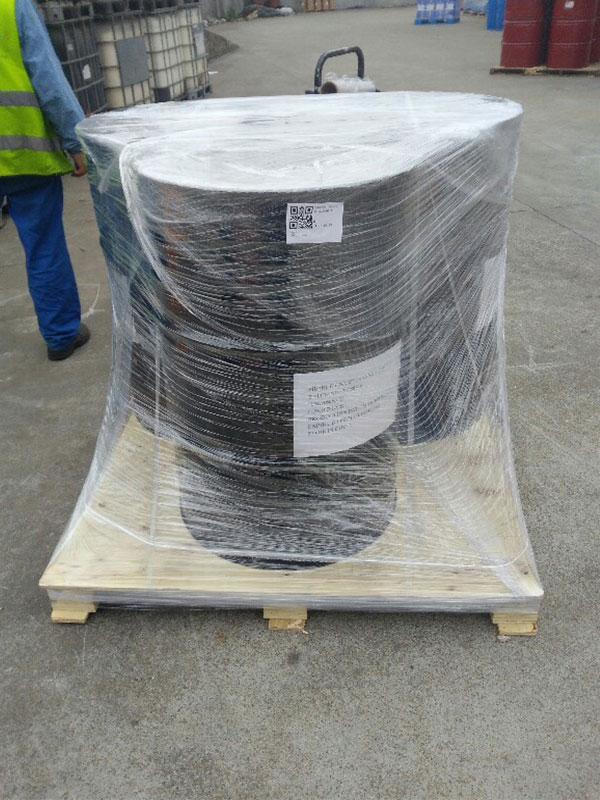
Verpakking: 200 kg/trommel

Levering: levering binnen 3-5 werkdagen


Opslag van cyclopentanon

Licht en drogen vermijden.


Neem nu contact met ons op!

Als je een COA, MSDS of TDS nodig hebt, vul dan je contactgegevens in op het formulier hieronder. We nemen meestal binnen 24 uur contact met je op. U kunt mij ook een e-mail sturen info@longchangchemical.com tijdens kantooruren (8:30 tot 18:00 UTC+8 ma. ~ za.) of gebruik de live chat op de website voor een snel antwoord.

Beoordelingen

Er zijn nog geen beoordelingen.

Schrijf als eerste een review over "Cyclopentanone CAS 120-92-3".

Contact

Dutch