
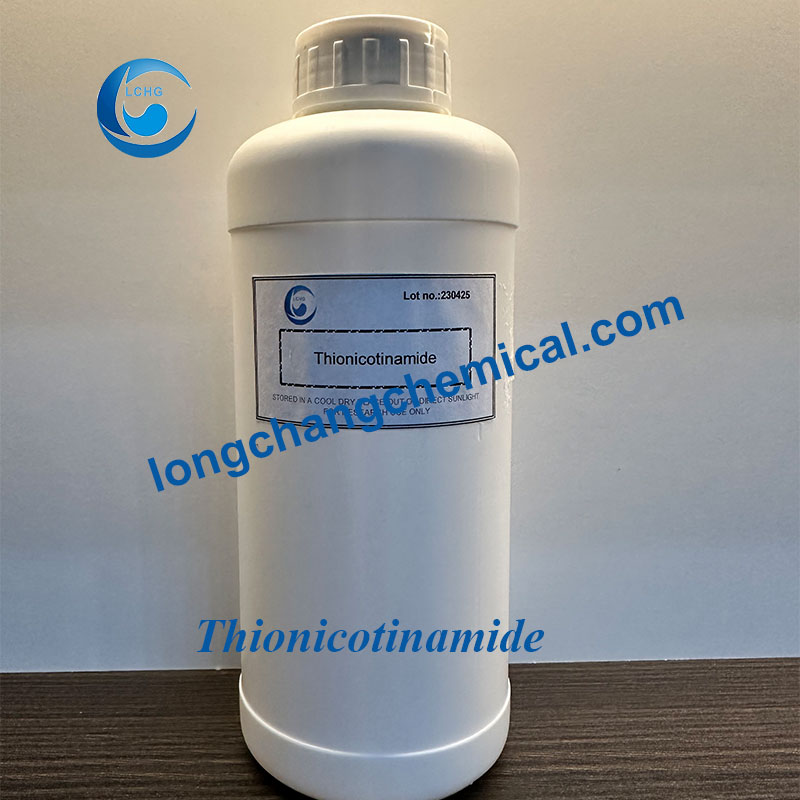

thionicotinamide Application scenarios
1. Pharmaceutical Intermediates (Core Applications) 💊
• Synthesis of anti-tuberculosis drugs: Participates as a key intermediate in the preparation of anti-tuberculosis drugs such as isoniazid derivatives, improving drug activity and targeting through molecular structure modification, and addressing drug resistance issues.
• Synthesis of anti-tumor drugs: Used to construct anti-tumor candidate molecules containing pyridine thioamide structures. These compounds can target and inhibit tumor cell proliferation or induce apoptosis, and are currently in the drug development and clinical trial stages.
• Synthesis of anti-inflammatory and antibacterial drugs: Used in the preparation of anti-inflammatory drug intermediates and precursors for novel antibacterial drugs targeting drug-resistant bacteria, expanding the range of anti-infective drugs.
2. Pesticide Intermediates 🚜
• Synthesis of insecticides and fungicides: Used in the preparation of pesticides containing pyridine thioamide structures, exhibiting good control effects against agricultural pests (such as aphids and planthoppers) and fungal diseases (such as powdery mildew and downy mildew).
• Synthesis of plant growth regulators: Its derivatives can regulate plant growth cycles, promote rooting, and prevent lodging, suitable for improving the quality and yield of food crops and cash crops.
3. Dye and Functional Material Synthesis 🎨
• Preparation of heterocyclic dyes: As a dye intermediate, it is used to synthesize pyridine-based acid dyes and reactive dyes, suitable for dyeing natural fibers such as wool and silk, with bright colors and excellent lightfastness.
• Synthesis of functional polymer materials: Used to prepare polymers containing thioamide groups. These materials have good heavy metal ion adsorption properties and can be applied to heavy metal removal in industrial wastewater treatment.
4. Coordination Chemistry and Catalysis Research 🧪
• Synthesis of metal complexes as ligands: The nitrogen and sulfur atoms in thioisonicotinamide can act as coordination sites, forming stable complexes with transition metals (such as copper, nickel, and palladium), used in catalytic organic synthesis reactions (such as coupling reactions and oxidation reactions).
• Used for metal ion detection: Its metal complexes have characteristic color or fluorescence properties, and can be developed as chemical probes for detecting heavy metal ions in water bodies, suitable for environmental monitoring.


Recensioni
Non ci sono ancora recensioni.