
Cyclopentanone CAS 120-92-3

Nom chimique : Cyclopentanone

Numéro CAS : 120-92-3

Formule moléculaire : C5H8O

Poids moléculaire : 84,12

Aspect : Liquide transparent

Essai : 99.5%

Structure moléculaire :image.png

Cyclopentanone Application scenarios

1. As a core intermediate in organic synthesis, it is used to prepare various fine chemicals (its primary use).

Synthetic pharmaceutical intermediates: These are key precursors for many antibacterial, antiviral, and anti-anxiety drugs, such as the synthesis of the antiepileptic drug gabapentin and the antidepressant moclobemide, as well as side-chain intermediates for antibacterial drugs. They can also be used to prepare intermediates for antihistamines and lipid-lowering drugs, primarily utilizing the addition and reduction properties of their ketone carbonyl groups in the reactions.

Synthetic pesticide intermediates: Used to produce highly effective and low-toxicity pesticides, including insecticides (such as pyrethroid derivatives), fungicides (such as heterocyclic fungicides for controlling fungal diseases in crops), and herbicides. They can enhance the activity and targeting of pesticides while reducing environmental toxicity.

Monomers for Synthetic Polymers: Used to prepare specialty resins (such as polycyclopentanone resin), polyesters, polyurethanes, etc. These polymers possess characteristics such as high and low temperature resistance, corrosion resistance, and high strength, making them suitable for manufacturing components in aerospace and high-end machinery. They can also be used to synthesize cyclopentene derivatives as rubber modifiers, improving the wear resistance and elasticity of rubber.

2. Applications in the Fragrance and Flavor Industry

Direct Use in Fragrance Blending: Cyclopentanone itself has a slight minty aroma and the characteristic soft scent of ketones. It can be used in small quantities to blend minty, fruity, and woody fragrances in daily-use fragrances (such as perfumes, soaps, and laundry detergents), playing a supporting role in enhancing and fixing the fragrance.

Synthetic Intermediates for High-Grade Fragrances: It is a key raw material for preparing sandalwood fragrances (such as sandalwood ethers and sandalwood esters). Sandalwood fragrances have a long-lasting and elegant aroma, widely used in the core blending of high-end perfumes and cosmetic fragrances. Simultaneously, it can be used to synthesize other alicyclic fragrances, compensating for the insufficient production of natural fragrances.

3. Solvent Uses

As a specialty solvent, it dissolves resins, oils, rubber, and other substances. Being an alicyclic ketone solvent, its solubility is superior to some aliphatic solvents, and its volatility is moderate. It is commonly used in the formulation of high-end coatings and inks, improving the leveling and adhesion of coatings, and is suitable for coating precision instruments and high-end furniture.

It is a commonly used solvent in laboratory organic synthesis, especially suitable for reactions requiring weakly polar ketone solvents. It does not undergo side reactions with most reactants, facilitating subsequent product separation and purification.

4. Other Industrial and Scientific Applications

Preparation of Fine Chemical Additives: For example, it can be used to synthesize lubricating oil additives, improving the oxidation resistance and anti-wear properties of lubricating oils and extending the service life of mechanical equipment; it can also be used to synthesize electroplating brighteners for metal electroplating processes, resulting in more uniform and glossy coatings.

Basic Raw Material in Scientific Research: Used to study the chemical reaction mechanisms of cyclopentane derivatives and develop novel functional compounds. It is also used as a standard for qualitative and quantitative analysis in chemical and pharmaceutical testing fields.

A small amount is used to prepare dye intermediates and synthesize alicyclic dyes. These dyes have bright colors and good lightfastness, and are suitable for dyeing synthetic fibers.

Description

Cyclopentanone CAS 120-92-3

Densité : 0,951 g/cm

Point de fusion : - 51 C

Point d'ébullition : 130-131 C

Indice de réfraction : 1.436-1.438

Point d'éclair : 31 C

Solubilité dans l'eau : insoluble dans l'eau.


ACO de la cyclopentanone

Objet

Standard

Apparence

Liquide transparent

Couleur (No Hazen)

≦10

Pureté (GC )

≧99.5%

Indice d'acidité (mgKOH/g)

≦0.5%

Impuretés totales

≦0.5%

Teneur en eau

≦0.5%

Utilisation de la cyclopentanone

1. En utilisant le cyclopentanone et le n-valéraldéhyde comme matières premières, il subit d'abord une condensation d'aldol puis une déshydratation pour produire du pentylcyclopentanone, suivie d'une hydrogénation catalytique sélective pour produire du pentylcyclopentanone, qui est puissant. Il peut être utilisé dans les formulations de parfums chimiques quotidiens. Le dosage peut être inférieur à 20%. L'IFRA n'a pas de restrictions.

2. En utilisant le n-hexanal et le cyclopentanone comme matières premières, on procède d'abord à une condensation, puis à une hydrogénation sélective pour obtenir l'hexylcyclopentanone. L'hexylcyclopentanone a un fort parfum de jasmin et un parfum fruité, qui peut être utilisé dans les parfums. Dans diverses autres formules d'arômes chimiques quotidiens, le dosage est compris entre 5%. L'IFRA n'a aucune restriction.

3. Le 1-pentène ou le 1-heptène obtenu par pyrolyse de la paraffine ou par déshydratation de l'alcool correspondant est utilisé comme matière première et, en présence de peroxyde de di-tert-butyle comme initiateur, il subit une réaction d'addition radicale avec le cyclopentanone pour former le 2 -Pentylcyclopentanone (ou 2-heptylcyclopentanone), qui devient le δ-décanolactone (ou δ-laurolactone) après dilatation du cycle par oxydation.

4. La voie de synthèse utilisant la cyclopentanone comme matière première est celle qui présente la plus grande valeur de production industrielle. La cyclopentanone subit d'abord une condensation aldolique avec le n-valéraldéhyde, le produit de condensation devient la 2-pentylcyclopentanone après déshydratation et hydrogénation sélective, et enfin la δ-décanolactone après expansion oxydative du cycle.

5. Le delta-décanolactone est principalement utilisé dans les formulations d'arômes comestibles. Il est considéré comme ayant la saveur caractéristique de la crème naturelle. Auparavant, les parfumeurs ont longtemps été limités à l'utilisation de parfums monomères tels que le diacétyle et la vanilline comme matière première principale pour la formulation d'arômes de crème. Cependant, les gens estiment généralement que l'arôme de crème préparé est de loin inférieur aux produits naturels en termes de goût ou de saveur. Seule l'utilisation de la δ-décanolactone permet d'obtenir un arôme de crème vif, en particulier lorsque la δ-décanolactone et la δ-laurolactone sont utilisées ensemble comme principales matières premières de parfum, l'arôme et l'effet de l'arôme de crème formulé seront meilleurs.

6. Prendre le cyclopentanone et le valéraldéhyde comme matières premières, condenser pour produire le 2-(1-hydroxy)pentylcyclopentanone, réagir avec le malonate de diméthyle, puis hydrolyser, décarboxyler et estérifier à 160~180℃ , On peut obtenir l'ester méthylique du dihydrojasmonate. Le dihydrojasmonate de méthyle est une épice alimentaire dont l'utilisation est temporairement autorisée par la norme GB2760-1996 de mon pays. Son arôme est meilleur que celui du jasmonate de méthyle naturel et ses propriétés sont relativement stables.

Emballage et expédition de la cyclopentanone

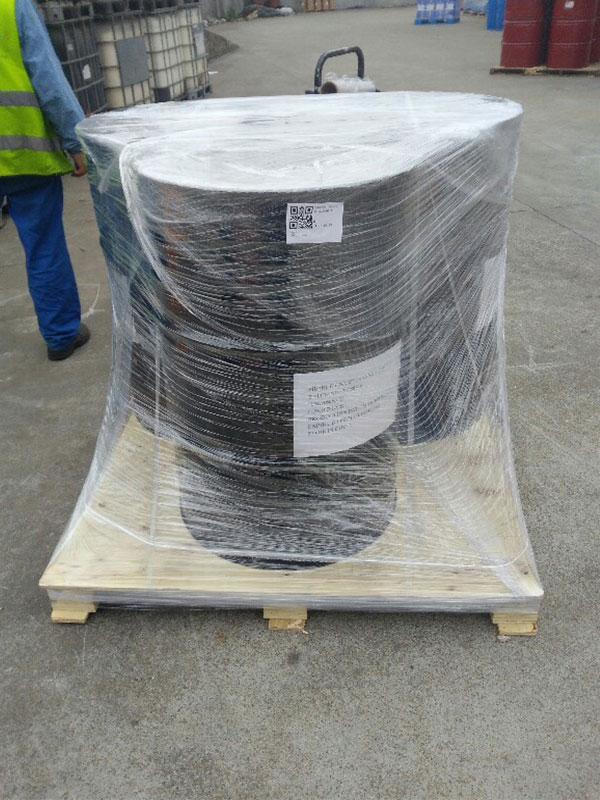
Emballage : 200kg/tambour

Livraison : dans un délai de 3 à 5 jours ouvrables


Stockage de la cyclopentanone

Éviter la lumière et le séchage.


Contactez-nous dès maintenant !

Si vous avez besoin de COA, MSDS ou TDS, veuillez remplir vos coordonnées dans le formulaire ci-dessous, nous vous contacterons généralement dans les 24 heures. Vous pouvez également m'envoyer un courriel info@longchangchemical.com pendant les heures de travail ( 8:30 am to 6:00 pm UTC+8 Mon.~Sat. ) ou utilisez le chat en direct du site web pour obtenir une réponse rapide.

Commentaires

Il n'y a pas encore de commentaires.

Soyez le premier à commenter "Cyclopentanone CAS 120-92-3"

Contact US

French