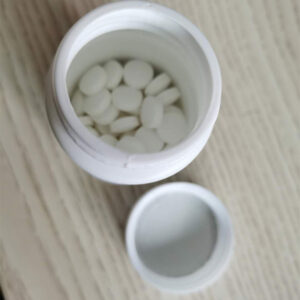
Cyclopentanon CAS 120-92-3

Chemische Bezeichnung: Cyclopentanon

CAS-Nr.:120-92-3

Molekulare Formel: C5H8O

Molekulargewicht: 84,12

Äußeres Erscheinungsbild: Transparente Flüssigkeit

Assay: 99.5%

Molekulare Struktur:bild.png

Cyclopentanone Application scenarios

1. As a core intermediate in organic synthesis, it is used to prepare various fine chemicals (its primary use).

Synthetic pharmaceutical intermediates: These are key precursors for many antibacterial, antiviral, and anti-anxiety drugs, such as the synthesis of the antiepileptic drug gabapentin and the antidepressant moclobemide, as well as side-chain intermediates for antibacterial drugs. They can also be used to prepare intermediates for antihistamines and lipid-lowering drugs, primarily utilizing the addition and reduction properties of their ketone carbonyl groups in the reactions.

Synthetic pesticide intermediates: Used to produce highly effective and low-toxicity pesticides, including insecticides (such as pyrethroid derivatives), fungicides (such as heterocyclic fungicides for controlling fungal diseases in crops), and herbicides. They can enhance the activity and targeting of pesticides while reducing environmental toxicity.

Monomers for Synthetic Polymers: Used to prepare specialty resins (such as polycyclopentanone resin), polyesters, polyurethanes, etc. These polymers possess characteristics such as high and low temperature resistance, corrosion resistance, and high strength, making them suitable for manufacturing components in aerospace and high-end machinery. They can also be used to synthesize cyclopentene derivatives as rubber modifiers, improving the wear resistance and elasticity of rubber.

2. Applications in the Fragrance and Flavor Industry

Direct Use in Fragrance Blending: Cyclopentanone itself has a slight minty aroma and the characteristic soft scent of ketones. It can be used in small quantities to blend minty, fruity, and woody fragrances in daily-use fragrances (such as perfumes, soaps, and laundry detergents), playing a supporting role in enhancing and fixing the fragrance.

Synthetic Intermediates for High-Grade Fragrances: It is a key raw material for preparing sandalwood fragrances (such as sandalwood ethers and sandalwood esters). Sandalwood fragrances have a long-lasting and elegant aroma, widely used in the core blending of high-end perfumes and cosmetic fragrances. Simultaneously, it can be used to synthesize other alicyclic fragrances, compensating for the insufficient production of natural fragrances.

3. Solvent Uses

As a specialty solvent, it dissolves resins, oils, rubber, and other substances. Being an alicyclic ketone solvent, its solubility is superior to some aliphatic solvents, and its volatility is moderate. It is commonly used in the formulation of high-end coatings and inks, improving the leveling and adhesion of coatings, and is suitable for coating precision instruments and high-end furniture.

It is a commonly used solvent in laboratory organic synthesis, especially suitable for reactions requiring weakly polar ketone solvents. It does not undergo side reactions with most reactants, facilitating subsequent product separation and purification.

4. Other Industrial and Scientific Applications

Preparation of Fine Chemical Additives: For example, it can be used to synthesize lubricating oil additives, improving the oxidation resistance and anti-wear properties of lubricating oils and extending the service life of mechanical equipment; it can also be used to synthesize electroplating brighteners for metal electroplating processes, resulting in more uniform and glossy coatings.

Basic Raw Material in Scientific Research: Used to study the chemical reaction mechanisms of cyclopentane derivatives and develop novel functional compounds. It is also used as a standard for qualitative and quantitative analysis in chemical and pharmaceutical testing fields.

A small amount is used to prepare dye intermediates and synthesize alicyclic dyes. These dyes have bright colors and good lightfastness, and are suitable for dyeing synthetic fibers.

Beschreibung

Cyclopentanon CAS 120-92-3

Dichte: 0,951 g/cm

Schmelzpunkt: - 51 C

Siedepunkt: 130-131 C

Brechungsindex: 1.436-1.438

Flammpunkt: 31 C

Wasserlöslichkeit: unlöslich in Wasser.


COA von Cyclopentanon

Artikel

Standard

Erscheinungsbild

Transparente Flüssigkeit

Farbe (Hazen-Nr.)

≦10

Reinheit (GC )

≧99.5%

Säurewert (mgKOH/g)

≦0.5%

Verunreinigungen insgesamt

≦0.5%

Wassergehalt

≦0.5%

Cyclopentanon Verwendung

1. Unter Verwendung von Cyclopentanon und n-Valeraldehyd als Rohstoffe wird zunächst eine Aldolkondensation und dann eine Dehydratisierung durchgeführt, um Pentylcyclopentanon zu erzeugen, gefolgt von einer selektiven katalytischen Hydrierung, um Pentylcyclopentanon zu erzeugen, das stark ist. Es hat einen blumigen und fruchtigen Duft und riecht nach Jasmin. Es kann in täglichen chemischen Duftformulierungen verwendet werden. Die Dosierung kann weniger als 20% betragen. Die IFRA hat keine Einschränkungen.

2. Unter Verwendung von n-Hexanal und Cyclopentanon als Rohstoffe werden sie zunächst kondensiert und dann selektiv hydriert, um Hexylcyclopentanon zu erhalten. Hexylcyclopentanon hat einen starken Jasminduft und einen fruchtigen Duft, der in Parfümdüften verwendet werden kann. Und in verschiedenen anderen täglichen chemischen Geschmacksformeln liegt die Dosierung innerhalb von 5%. Die IFRA hat keine Einschränkungen.

3. Das durch Pyrolyse von Paraffin oder Dehydratisierung des entsprechenden Alkohols gewonnene 1-Penten oder 1-Hepten wird als Ausgangsmaterial verwendet und in Gegenwart von Di-tert-butylperoxid als Initiator einer radikalischen Additionsreaktion mit Cyclopentanon unterzogen, um 2-Pentylcyclopentanon (oder 2-Heptylcyclopentanon) zu bilden, das nach der Ringerweiterung durch Oxidation zu δ-Decanolacton (oder δ-Laurolacton) wird.

4. Der Syntheseweg mit Cyclopentanon als Ausgangsstoff hat den größten industriellen Produktionswert. Cyclopentanon wird zunächst einer Aldolkondensation mit n-Valeraldehyd unterzogen, das Kondensationsprodukt wird nach Dehydratisierung und selektiver Hydrierung zu 2-Pentylcyclopentanon und schließlich nach oxidativer Ringerweiterung zu δ-Decanolacton.

5. Delta-Decanolacton wird hauptsächlich in essbaren Geschmacksformulierungen verwendet. Es soll den charakteristischen Geschmack von natürlicher Sahne haben. Zuvor waren die Parfümeure lange Zeit darauf beschränkt, monomere Duftstoffe wie Diacetyl und Vanillin als Hauptrohstoff für die Formulierung von Sahnearomen zu verwenden. Die Menschen haben jedoch im Allgemeinen das Gefühl, dass das zubereitete Sahnearoma den natürlichen Produkten in Bezug auf Geschmack und Aroma weit unterlegen ist. Nur wenn δ-Decanolacton verwendet wird, kann es einen lebendigen Sahnegeschmack haben, besonders wenn δ-Decanolacton und δ-Laurolacton zusammen als Hauptduftrohstoffe verwendet werden, werden der Geschmack und die Wirkung des formulierten Sahnegeschmacks besser sein.

6. Nehmen Sie Cyclopentanon und Valeraldehyd als Rohstoffe, kondensieren Sie, um 2-(1-Hydroxy)pentylcyclopentanon zu erzeugen, reagieren Sie mit Dimethylmalonat, und dann hydrolysieren, decarboxylieren und verestern Sie bei 160~180℃ , Man erhält Dihydrojasmonatmethylester. Dihydrojasmonatmethylester ist ein Lebensmittelgewürz, das nach GB2760-1996 in meinem Land vorübergehend verwendet werden darf. Sein Aroma ist besser als das von natürlichem Methyljasmonat und seine Eigenschaften sind relativ stabil.

Cyclopentanon Verpackung und Versand

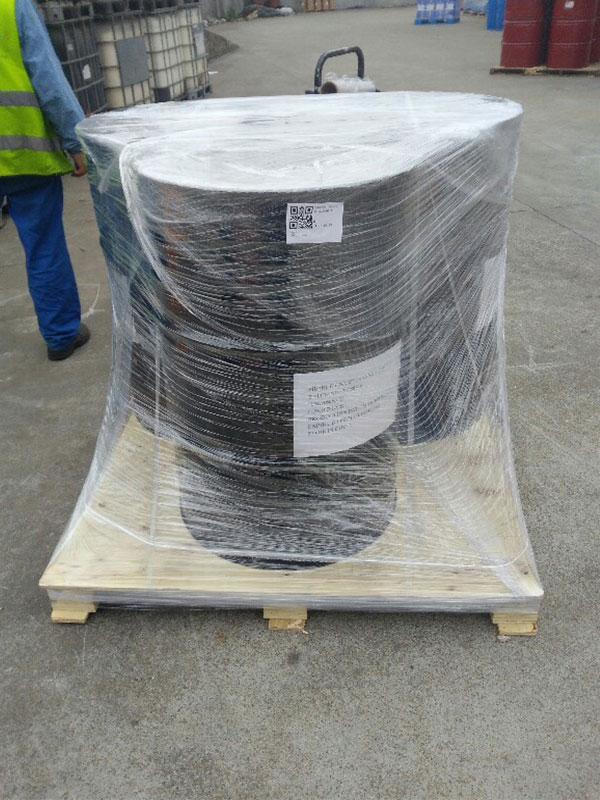
Verpackung: 200kg/Fass

Lieferung:Lieferung innerhalb von 3-5 Arbeitstagen


Lagerung von Cyclopentanon

Vermeiden von Licht und Trocknung.


Kontaktieren Sie uns jetzt!

Wenn Sie COA, MSDS oder TDS benötigen, geben Sie bitte Ihre Kontaktinformationen in das untenstehende Formular ein. Wir werden uns in der Regel innerhalb von 24 Stunden mit Ihnen in Verbindung setzen. Sie können mir auch eine E-Mail schicken info@longchangchemical.com während der Geschäftszeiten ( 8:30 bis 18:00 Uhr UTC+8 Mo.~Sa. ) oder nutzen Sie den Live-Chat auf der Website, um eine schnelle Antwort zu erhalten.

Bewertungen

Es sind noch keine Bewertungen vorhanden.

Seien Sie der Erste, der "Cyclopentanone CAS 120-92-3" bewertet.

Kontakt US

German