
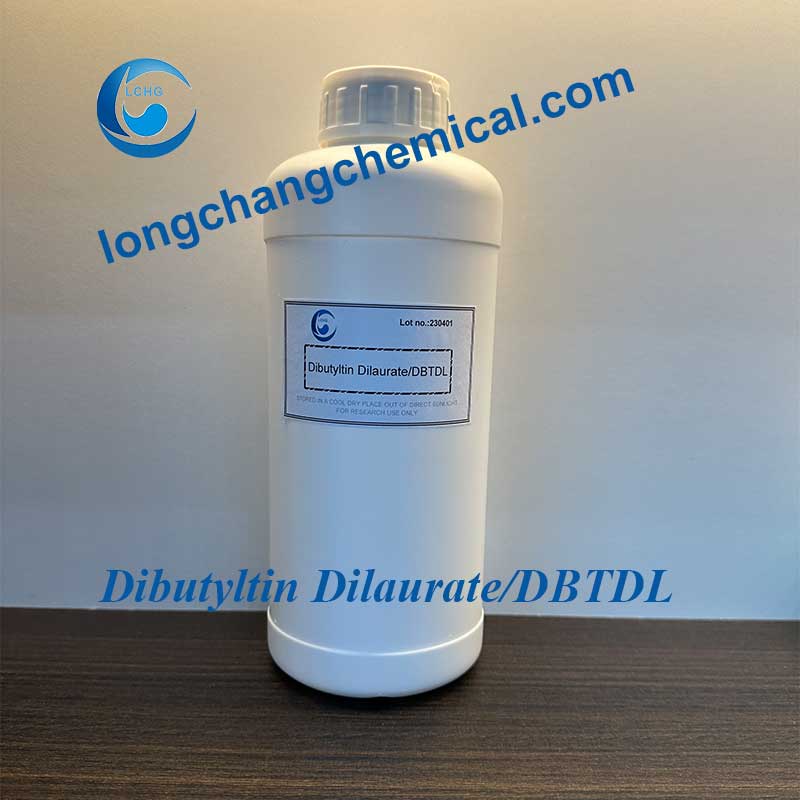
Dibutylzinndilaurat Anwendungsszenarien
1. Polyurethan (PU) Vernetzungs-/Härtungskatalysatoren:
Katalysieren effizient die Urethanreaktion zwischen Isocyanaten und Polyolen und verbessern so die Vernetzungsdichte und Aushärtungsgeschwindigkeit; Typische Systeme: Zweikomponenten-PU-Beschichtungen/Klebstoffe/Dichtstoffe, Elastomere, Weich-/Hartschäume, Formschäume, einkomponentiges feuchtigkeitshärtendes PU; Wichtige Punkte: Die Dosierung beträgt in der Regel 0,05%-0,15% (basierend auf Polyol), Temperaturkontrolle und Rühren sind erforderlich, um ein Anbrennen oder Blasenbildung zu verhindern, und falls erforderlich, kann es mit Aminen gemischt werden, um das Gleichgewicht zwischen Gelieren und Schäumen zu kontrollieren.
2. Raumtemperaturvulkanisierende (RTV) Silikongummi/Silikondichtstoff-Härtungskatalysatoren:
Katalysiert die Silanolkondensation und beschleunigt die Aushärtung und Oberflächentrocknung von RTV vom Typ De-Alkohol/De-Oxim/De-Essigsäure; Typische Produkte: Silikondichtstoffe für Bau/Automobil/Elektronik, Vergussmassen, Formmassen, Beschichtungen; Wichtige Punkte: Häufig mit anderen zinnorganischen Stoffen oder Verzögerern gemischt, um die Geruchsbildung zu verringern und die Aushärtungsgeschwindigkeit zu steuern; geeignet für die Anwendung bei Raumtemperatur und die schnelle Herstellung von Teilen.
3. PVC-Hitzestabilisatoren (mit Schwerpunkt auf flexiblen und halbstarren Materialien):
Verhindern den HCl-Abbau, verbessern die Verarbeitungsstabilität bei hohen Temperaturen und die anfängliche Färbung und sorgen gleichzeitig für Schmierung und Transparenz; typische Produkte: Weich-PVC-Folien, Schrumpffolien, transparente Schläuche, Kunstleder, Kabelmaterialien, transparente Türvorhänge; werden oft als Hilfsstabilisatoren/Gleitmittel in Hart-PVC verwendet und mit Hauptstabilisatoren gemischt, um das Verarbeitungsfenster und die Fließfähigkeit zu optimieren.
4. Katalysatoren für silanvernetzte Polyolefine (XLPO/XLPE):
Katalysieren die Silanpfropfung und Hydrolysekondensation und verbessern so die Hochtemperaturbeständigkeit, die Rissfestigkeit und die mechanischen Eigenschaften von Rohren und Kabelummantelungen; typische Anwendungen: Fußbodenheizungsrohre, vernetzte Polyethylenrohre für die Wasserversorgung, Kabelisolierung/-ummantelung; Hauptmerkmale: Niedrige Dosierung, hohe Effizienz, geeignet für Extrusions- und Bestrahlungs-/Heißwasser-Vernetzungsprozesse.
5. Katalysatoren für Umesterungs-/Veresterungs-/Kondensationsreaktionen (Organische Synthese und Polymerrohstoffe):
Wird bei der Umesterung, Veresterung, Silanpolykondensation und Synthese von Polyester-/Polycarbonatrohstoffen verwendet; typische Anwendungen: synthetische Schmiermittel, Weichmacher, Antioxidantien, pharmazeutische/Pestizid-Zwischenprodukte; Hauptmerkmale: hohe Aktivität, schnelle Reaktionsgeschwindigkeit, geeignet für kontinuierliche und Batch-Verfahren.
6. Beschichtung/Farbe/Klebstoffmodifikation und Aushärtungsförderung:
Beschleunigt die Vernetzung und Aushärtung, verbessert die Haftung, die Härte, die chemische Beständigkeit und die Witterungsbeständigkeit; typische Systeme: industrielle Korrosionsschutzfarben, Holzbeschichtungen, Beschichtungen von Metallsubstraten, UV-Härtungshilfsmittel; wichtige Punkte: zunächst Tests in kleinem Maßstab durchführen, um die Kompatibilität und das Vergilbungsrisiko zu prüfen, die Dosierung kontrollieren, um eine übermäßige Vernetzung zu verhindern.


