
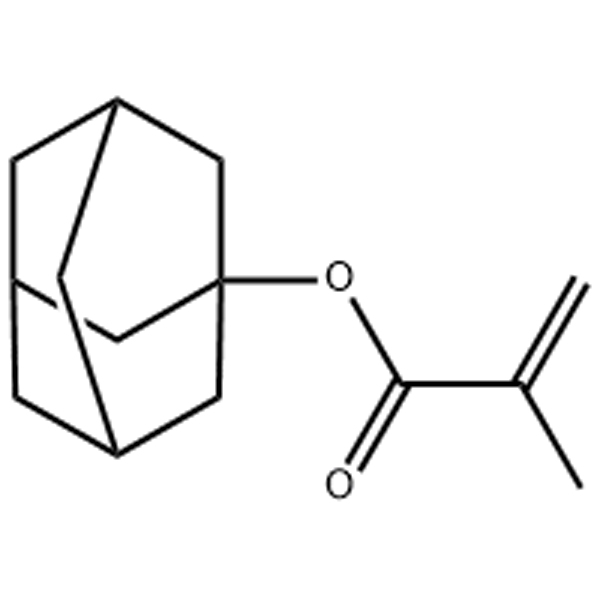
ADAMA Monomer Anwendungsszenarien
1. Polymere und Werkstoffkunde
Synthese von Hochleistungspolymeren (wie0 Polyamide, Polyester, Polyurethane), Spezialharzen, Beschichtungen und Klebstoffen.
Die eingeführte Adamantan-Gruppe verbessert die thermische Stabilität, mechanische Festigkeit und Steifigkeit der Polymere erheblich.
2. Elektronik und fotolithografische Materialien
Wird als Rohstoff für Photoresists (fotolithografische Materialien) verwendet.
Die Adamantan-Struktur verleiht dem Material eine niedrige Dielektrizitätskonstante, eine hohe Transparenz und eine gute Beständigkeit gegen Trockenätzung, wodurch es sich für die High-End-Halbleiterfertigung eignet.
3. Biomedizinischer Bereich
Wird bei der Herstellung von Medikamentenverabreichungssystemen, biokompatiblen Materialien (z. B. medizinische Katheter, Implantatbeschichtungen) und Dentalmaterialien verwendet.
Die Polymere weisen in der Regel eine gute Biokompatibilität auf, und ihre Hydrophobie und sterischen Effekte können zur Kontrolle der Wirkstofffreisetzung genutzt werden.
4. Forschung und andere
Wird als Zwischenprodukt in der organischen Synthese zur Herstellung anderer Adamantan-Derivate verwendet. Es kann auch in kosmetischen Formulierungen Verwendung finden.
Chemische Reaktionen werden mit der polymerisierbaren Methacrylatgruppe und der modifizierbaren Adamantangruppe durchgeführt.
💡 Beziehung zwischen Eigenschaften und Anwendungen
Diese Anwendungen profitieren vor allem von zwei Hauptbestandteilen des Moleküls:
Methacrylat-Gruppe:
Ermöglicht den einfachen Einbau in Polymerketten durch radikalische Polymerisation (z. B. Atomtransfer-Radikalpolymerisation, ATRP).
Adamantan-Gruppe:
Eine große, starre, hydrophobe dreidimensionale käfigartige Struktur. Sie erhöht effektiv die Glasübergangstemperatur (Tg) des Polymers und verbessert dadurch die Wärmebeständigkeit; außerdem vergrößert sie das freie Volumen zwischen den Molekülen, wodurch die Dielektrizitätskonstante des Materials gesenkt werden kann.


Mia Martinez -
Außergewöhnliche Produktqualität und blitzschnelle Lieferung! Ich bin sehr zufrieden mit meinem Kauf. Werde auf jeden Fall wieder hier einkaufen!